





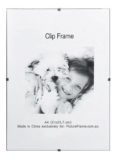

A picture frame's rebate ( or rabbet in the USA ) does not cover or hide from view a great 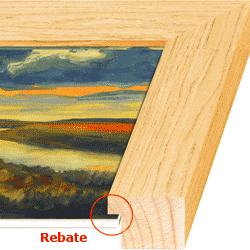 deal of the art being framed. Typically, it is be around 5 to 7 mm, depending on the moulding ( picture frame ) manufacturer. The circle in the accompanying illustration shows a typical rebate width and ensuing artwork coverage. This "covering" of the artwork normally occurs with all picture frames an photo frames and there are no simple or inexpensive ways to avoid it. Of course, one could use a clip frame, which not being a "proper" frame, has no intrusive rebate and therefore can display the entire artwork but clip frames are a very different product ... look and feel from picture frames. If the incidental coverage of the artwork is something a customer absolutely wants minimized then a skilled picture framer can make photo frames and picture frames with a "wide" fit meaning that the amount covered or hidden by the picture frame (rabbet) can be as little as 1mm.
What A Picture Frame Rebate is
The moulding ( frame ) rebates which cover a little bit of the edges of any and all artwork being framed are a necessary feature of all picture frames. These serve as "place-holders", or receptacles, which hold into place the backing, artwork, mat work and glass "sandwich".
Without rebates, the sandwich with the components, , would fall out of the picture frame. By necessity, the rebate will also cover a few millimetres of the window mat ( or window mount, as it's called in the U.K. )
With limited edition prints, signed, or numbered artwork, or any art bearing remarques, or signatures, which will be framed, it is important that the artist or author not sign or write anything too close to the edge of paper.
If words, numbers or any characters, are written too close to the edges, then these may fully or partially be hidden under the frames' rebate. These may also appear too close to the edge, giving the framed artwork an unprofessional or unbalanced look and feel.
While picture frame mouldings vary in the colour, finish, shape, width and height, their rebate size are fairly uniform. On most picture framing mouldings, rebates are approximately 5 to 7 mm wide by 10 to 12 mm deep. Whilst this doesn't seem particularly big, it doesn't need to be.
We can add up a frame's individual components, an MDF or foam board backing of between 3 and 5mm, the artwork of maybe .25mm, a window mat or double mat being maybe 1.5 or 3 mm and the glass, generally under 2 mm.
All these items, when stacked on top of one another, will add up to less than 10mmm depth. This is sufficient for all picture framing component to go and be flush and flat with the back of the frame. An interesting, if incidental, aspect of a picture frame's rebate is that it behaves somewhat like a time capsule.
Many years ago an artist brought to us a new oil painting and an old framed oil painting. She wanted the old painting, deemed worthless, thrown out and the new painting put in the old frame.
When we de-framed the old painting out we saw a title, inscription and name hand-written on the side of the old stretcher. This information had been hidden from view since the art was framed, decades ago.
We Googled what we saw and found that the work was that of a fairly well know American artist, and far from being worthless, it had a definite market value. Needless to say, our Customer was very grateful!
De-Acidifying Rebates
One last point about picture frames rebates. Most picture frames aren't for conservation jobs nor require museum standard quality. However if this is required, the entire rebate surface, that is, the width and height surfaces, should be lined or covered with special barrier liners or spacers.
These liners or spacer are constructed so as to prevent and lignin stains or acid migration form the raw wood of the moulding and into the valuable artwork. For related information on mounting and custom picture framing see our Picture Framing and Mounting page.
It must be added that if it is deemed necessary for a picture frames' rebates to be sealed with acid-free tapes or archival rabbet ( USA parlance ) liners , then the artwork itself should also be, at the very least, also acid free or archivally framed.
On the specific subject of acid-free framing, we would recommend reviewing the blog The Great Acid Framing Disaster which several Customers and readers have told us is very helpful and informative
The Do's And Dont's When Framing Signed Art
| List of Do's | List of Don'ts | ||
| ✓ | Do consider that most, if not all, of the non-reflective glass we have seen dulls and hazes the artwork noticeably. If unsure ask you picture framer for the glass samples before deciding. | ❌ | Don't ask for a window mat if your art is signed right down at the bottom edge of the print. The mat will certainly intrude in the signature field and the design will definitely look unaesthetic. Perhaps then, floating the print onto a backing might have the same effect. |
| ✓ | Do bear in mind that non-reflective is not the same price as clear glass and is costed differently by disparate picture framing businesses. In our own workshop it is around 2.5 times more expensive. | ❌ | Don't expect non-reflective glass to be absolutely, completely and thoroughly reflection-free. All the suppliers we know of sell varieties that do reflect a little, perhaps by 5 to 10%. It's to be best to ask your picture framer to show you a sample when at the picture framing consultation stage. |
| ✓ | Do remember that the more non-reflective glass is raised from the surface of the art, the more that clarity and transparency are lost. Thus, a double window mat is out of the question. A single mat also proffers visibly diminished clarity. Ask for samples, to make sure you won't be disappointed. | ❌ | Don't bother shopping around for ready-made frames or off-the-shelf-frames with non reflective glass. You'll hardly find any on sale. This is because this type of glass makes the product expensive. Most online shoppers look for what's the the cheapest, not necessarily what's the best. |
Great to see some information about this stuff on picture frames and photo frames. So I now know that the nothing on my picture will be cut off, but rather, covered up by the edge of the frame. Then the picture will look smaller, right? I once blamed a picture framer for chopping off the edges of my photo but he said he didn’t but I didn’t believe him. So why could he not have not explained about this rebate or rabbet? I wish picture framers would explain better or talk more about these things and picture frames!!
I’m a graphic artist and I design certificates, awards, recognitions, affiliations and other documents for clients. Often they want me to add borders, bullets or thin lines around my artwork and on the 4 sides of the document. Just as often they want these as close as possible and or as close to the frame as possible. So if the document’s edges are covered up to 5mm from the rebates of the picture frame, this can interfere with my design. So my rule is, never design a line, bullet or border too close to the edges of the paper. I now find that 2 cms is the closest I want to go to the edges of picture frames. So that works for me now