







In most cases, though not all, yes, a rolled up painting on canvas 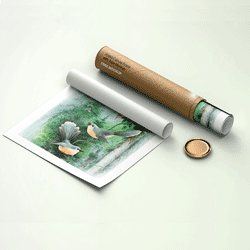 can be framed. The canvas can be unrolled, allowed to relax and either simply stretched, or fully framed. Sometimes though, either or both methods cannot be performed. Invariably, this is because the painting was painted not in quality or professional artists' oils but in much more common, acrylic, ceiling or house paint. This is frequently true of the large, popular, holiday paintings tourists bring back from many South East Asian destinations. House paints aren't meant to be used for painting art, but because these are so much cheaper, poor, penurious artists often use them. When this happens, none is the wiser. This is largely because when
the paintings are finished, these always look great pinned up up on boards. The buyers, often young people in carefree, holidays mood, don't have the knowledge or experience to inquire about, nor query, the art materials that have been used.
Why Some Paintings Spilt And Crack
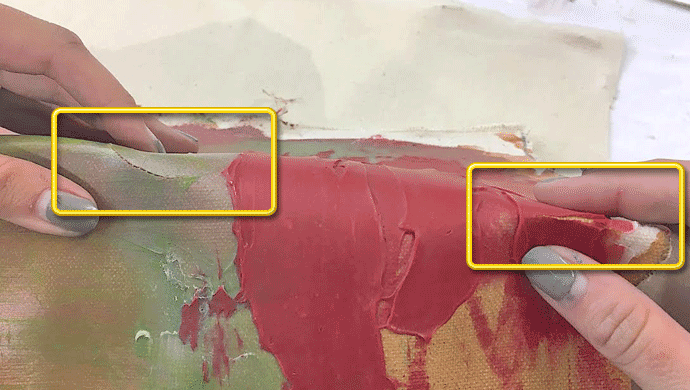
Most buyers just want to bargain down the prices to what they want, they then roll up and tube up the canvases and take them back to Australia. Many of these acrylic paintings are painted quite thickly, almost palette-like and dry up while tightly rolled up in a small tubes. On de-tubing, unrolling and straightening them up, the surface of the paintings sometimes start to split and crack. One example is shown below:

We have witnessed this phenomenon not once, but several times. Paintings with this type of cheap, ceiling or wall paint, will readily split and crack if even slightly bent or twisted during straightening or stretching.
In other painting examples, artists, instead of painting on linen canvases, have painted on cotton-like, thin materials, like bed sheets, which have been gessoed over and then painted.
Unfortunately, this medium and method are just as bad, if not worse, than painting with acrylic house paint.
Nevertheless, even withy these problems and challenging circumstances there are solutions. In many cases, inferior and cracked canvases can be successfully framed not by stretching them over a stretcher frame, but by wet-mounting them on suitable backings.
If you're in the habit of going overseas to buy your oil paintings and shipping them home to yourself, family or friends, you might consider a few tips to make sure your artwork arrives home in a good condition.
If possible, ask the artist you're buying the oil painting from to tell your or show you the paint he used. If that's not possible, at least ask if oil paint or house paint has been used. Try to avoid buying any art painted with house paint, no matter how great the painting may look. The painting will crack when rolled or unrolled from its mailing or transport tube.
Before rolling up and shipping your oil painting, let it cure or dry properly. Ask the artist or the gallery you bought it from how long this should be. They ought to know.
How To Minimize Splitting and Cracking
Whoever rolls and tubes the art should lay a sheet of plastic or polyethylene on the canvas surface and before you rolling it. Make sure it's new and clean. Glad wrap or bubble wrap are unsuitable as these might ferrotype (stick to) the paint and flak off and ruin the artwork.
Roll and unroll the oil painting at warm or ambient room temperature and not in cold weather. Doing so while very cold or cold might just crack the oil paint, especially if thick.
Roll the painting into the widest tube you can find ( 10cms or more ) and do so as loosely as you can. The less the curvature of the rolled canvas is, the less the risk of damage. The canvas should be rolled with the painted surface facing outwards, not inwards.
Most people do the opposite and unwittingly increase the surface curvature and tension. Roll up the canvas as evenly as possible and tape its outer edges securely to the transporting tube to stop the canvas from moving and bumping during its transit.
If possible, put the tube you've rolled up your canvas in into another, bigger tube. The double wall protection will enhance its protection from damage during transport. Keep the transport tube upright on its ends rather than flat on its side, especially with large and heavy canvases.
This will reduce the weight and unilateral surface paint compression. Don't leave the painting rolled inside its tube any longer than you have to. Unroll it or have someone unroll it as soon as you possible.
Lastly, if the tube with the rolled up canvas will be sent to a third party or someone other than you make sure that you include a note with your instructions as to what to do. At the very least, if the canvas is not going to be framed anytime soon, the person receiving it and removing it from its tube should place it flat somewhere flat, clean and at room temperature. Thank you for reading this post "I brought back home my painting rolled up in a tube, will it be all right to frame?".
What To Do and Not To Do When Shipping Acrylic Paintings
| List of Do's | List of Don'ts | ||
| ✓ | Do ask artists what type of paint they have used used before buying their paintings. If they used acrylics, instead of oils, the painting may split and crack whilst travelling or whilst being handled after arrival after handling. | ❌ | Don't expect tourist art, street art or market art to be archival, acid-free or created with quality materials. Most artists in most countries struggle to make a living from their art. Largely as a consequence of this, they tend to use materials that are, most often, the cheapest of the cheap and thus, friable, fugitive, ephemeral, rigid, brittle and acidic. |
| ✓ | Do remove any rolled up painting from their travelling tubes as soon as possible after their arrival. The less time these stay rolled up the better because they tend to dry up curved and bent, rather than flat. The latter makes stretching, mounting and framing more difficult and, sometimes, impossible. | ❌ | Don't lend too much credence on Certificates of Authenticity accompanying most overseas art. Not only are these difficult to validate, but pretty much anyone with a cheap printer can create as many as needed with free online templates and A.I. applications. |
| ✓ | Do remember that paintings don't necessarily have to be stretched and framed. Actually, most of them are mounted and framed, which is easier, simpler, faster and cheaper since only one frame is needed, instead of two. | ❌ | Don't expect custom picture framing to always be cheaper than the cost of the painting. For instance, a common remark we get from Customers wanting Balinese paintings framed, is that the framing almost always costs more than the art. They say that because they didn't think of it, or expect it to be so. |
Gotta say, some picture framers can work miracles!! I brought back a whole lot of oil paintings on canvas from Indonesia for my new home renovation, about 4 rooms, about 22 oils. When I was oversea I stuffed the whole lot in a couple of plastic tubes as I coulnd’t bring back the wooden picture frames. When I got back to Australia and went to get them framed, some of them were cracking in the middle, especially the really thick-layered ones. Anyway I took them to a couple of places where they wanted and arm and a leg for them. At one place in Brighton, they talked about getting an art conservator to fix the oils, they were quoting 3.3k to do the whole lot. Then I got online and found http://pictureframe.com.au The old framer did the old lot for me for $1,400 less than half that I was getting quoted! For the oils that were cracking up the framer there didn’t think that was too big a drama as he saw them all the time. So he glued them down ( they were only decorators’ paintings, not Mona Lisas) and then put them in picture frames, no sweat! i just can’t believe how much difference there is in picture framing prices! Shop around folks!
Just got back from bali and didnt see this article but i wish i did. I brought home oils and they have starting cracking. Such a shame because they are beautiful. Some of the paint has started to flake off. Like the article said, its been really thickly painted on. Theres huge differences in the texture which makes it really unique but also hard to transport. Interesting to note the comment from Barry, not sure i want to spend 3.3k! Wowee, who has that kind of money for frames? Im going back next year so i’ll definitely remember these tips! They didnt cost me much so i’ll just buy some more when i go.